Attic Insulation in Rolling Hills Estates, CA
Energy-Saving Attic Insulation in Rolling Hills Estates, CA for Rolling Hills Estates, CA Homes — Licensed & Insured
Expert attic insulation in Rolling Hills Estates, CA. High Return Insulation offers blown-in, spray foam & removal. Free estimates — call 310-496-8515 today.
Attic insulation is the thermal and air-sealing barrier installed between your living space and the unconditioned attic above, controlling heat transfer, moisture movement, and energy loss throughout your home. In Rolling Hills Estates — a hilltop community perched above the Palos Verdes Peninsula — the combination of coastal marine layer mornings, afternoon sun exposure at elevations above 1,000 feet, and the area’s signature ranch-style and mid-century homes creates a unique insulation environment unlike anywhere else on the South Bay coast.
High Return Insulation is a professional insulation contractor serving Rolling Hills Estates and the surrounding Palos Verdes Peninsula communities. Our team understands the specific building stock, climate patterns, and energy code requirements that define this city. Whether your home was built during the post-war residential boom of the 1950s and 1960s or underwent renovation in the decades since, we deliver insulation solutions calibrated to your home’s age, construction style, and the demands of this distinctive hilltop microclimate.
Understanding Attic Insulation in Rolling Hills Estates, CA
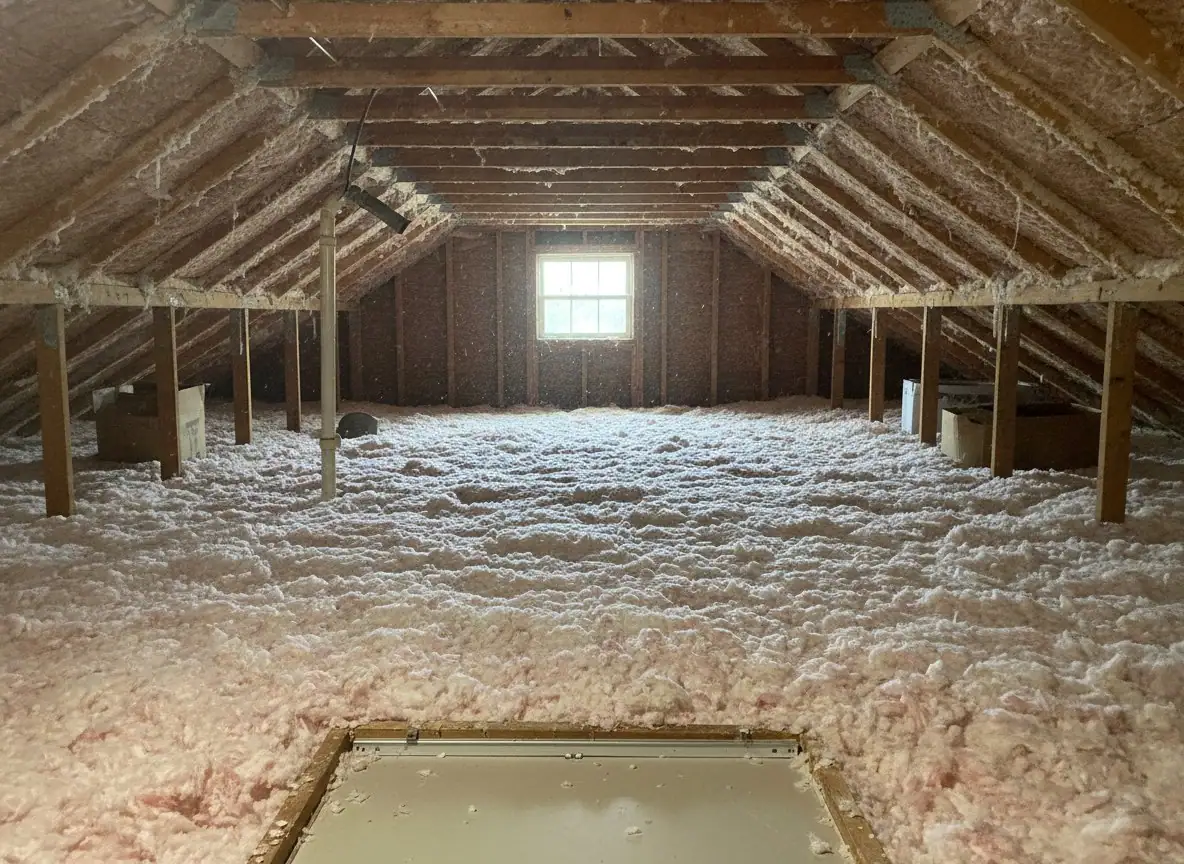
Attic insulation functions by slowing the rate at which heat moves between your home’s conditioned interior and the unconditioned attic space above it. In summer, a poorly insulated attic can reach temperatures exceeding 150°F, pushing radiant heat downward into bedrooms, living rooms, and hallways. In winter, warm air generated by your heating system rises and escapes through an under-insulated attic ceiling, forcing your furnace or heat pump to run longer and consume more energy. Proper attic insulation addresses both of these problems simultaneously.
The performance of attic insulation is measured in R-value — a number that reflects resistance to heat flow. The higher the R-value, the greater the insulating power. The U.S. Department of Energy’s recommended R-value for attics in Climate Zone 3, which covers Rolling Hills Estates, is R-38 to R-60 for most existing homes. Many homes in the Rolling Hills Estates community, particularly those built before 1980, have original insulation measuring between R-11 and R-19 — well below current standards.
Read moreShow less
Historically, attic insulation in Southern California was treated as a secondary consideration compared to markets in colder climates. Builders during the 1950s and 1960s residential expansion of the Palos Verdes Peninsula, when communities like Rolling Hills Estates were being platted and developed, commonly installed minimal fiberglass batt insulation or left attic floors with only a few inches of loose fill. The assumption was that the mild coastal climate did not demand high-performance thermal envelopes.
That assumption has proven costly. Modern energy modeling shows that even in Mediterranean-adjacent coastal climates, upgrading attic insulation from R-11 to R-49 can reduce annual heating and cooling costs by 20 to 30 percent. For Rolling Hills Estates homeowners with larger ranch-style homes — many of which exceed 2,000 square feet of living space under broad, low-pitched roofs — the attic footprint is substantial, and so are the energy savings available through proper insulation upgrades.
In addition to energy performance, attic insulation plays a direct role in indoor air quality, moisture control, and structural longevity. Inadequate insulation allows condensation cycles that can foster mold growth in attic sheathing, degrade rafters over time, and permit pest entry points. In Rolling Hills Estates, where homes sit in elevated terrain with exposure to coastal fog and occasional Santa Ana wind events, managing these factors is especially important.
Why Attic Insulation Is Needed in Rolling Hills Estates
The Palos Verdes Marine Layer Effect
Rolling Hills Estates sits directly in the path of the persistent marine layer that moves inland from the Pacific Ocean each morning from late May through early September — a period locals call “June Gloom,” though the pattern often extends well into August. This marine layer deposits moisture on roofing materials, attic ventilation points, and any exposed insulation near soffit vents. Homes with degraded vapor barriers or aged fiberglass batts that have absorbed moisture over years of this seasonal cycle lose significant R-value. Wet fiberglass insulation can lose 40 percent or more of its rated thermal performance.
Elevated Sun Exposure and Radiant Heat Load
Because Rolling Hills Estates sits above the coastal fog line on many afternoons, homes on the upper elevations — particularly along Palos Verdes Drive North, Crenshaw Boulevard, and within the Highridge Road corridor — receive substantially more direct solar radiation than neighboring flatland communities. Dark concrete tile roofs, common throughout the city, absorb and retain this heat. Attic temperatures in homes along Highridge Road and Williamsburg Lane have been measured above 140°F during peak summer afternoons, driving up cooling loads dramatically for homes with attic insulation below R-30.
Santa Ana Wind Events and Thermal Stress
The Santa Ana wind events that periodically affect the Palos Verdes Peninsula — most intensely in October through December — drive hot, dry air across the hill communities at speeds that can exceed 50 mph on exposed ridgelines. These events create negative pressure on the windward side of homes, pulling conditioned air out of the living space through gaps in the attic floor and bypasses around recessed lighting, plumbing penetrations, and HVAC chase openings. Homes in Rolling Hills Estates with unsealed attic bypasses can lose a significant portion of their heated air during a single Santa Ana event, making air sealing alongside insulation installation critically important.
Aging Building Stock and Original Insulation Degradation
A large portion of the residential housing in Rolling Hills Estates was constructed between 1955 and 1975, when the city was developed as a planned equestrian community. The building codes of that era required minimal attic insulation — often only R-11 in the form of 3.5-inch kraft-faced fiberglass batts placed between ceiling joists. After 50 to 70 years, this original insulation has typically compressed, settled, and in many cases been disturbed by HVAC contractors, pest control services, and past rodent activity. Compacted insulation performs significantly below its rated R-value.
Rodent Activity on the Palos Verdes Hillside
Rolling Hills Estates borders significant open space including the Palos Verdes Nature Preserve and several equestrian trail corridors. Roof rats and ground squirrels common to these habitat edges routinely enter attic spaces through gaps around eaves, ridge vents, and gable openings. Once inside, rodents nest in and tunnel through insulation, contaminating it with urine and feces and dramatically reducing its thermal effectiveness. Homes along the perimeter of the city — particularly near the Chandler Ranch Road area and properties backing up to trail easements — are especially vulnerable to this cycle.
Free, no-obligation estimates
Talk to High Return Insulation
Tell us what you need and we’ll take it from there.
Signs You Need Attic Insulation in Rolling Hills Estates
Energy and Comfort Symptoms
- Monthly electricity bills that spike above $300 during July and August despite moderate thermostat settings
- Upper-floor rooms or rooms directly below the roofline that feel significantly warmer than the rest of the house during summer afternoons
- HVAC system running continuously during hot spells without reaching the set temperature
- Cold drafts or temperature inconsistencies in bedrooms during Santa Ana wind events in October and November
Visual and Physical Indicators in the Attic
- Attic insulation depth below 10 inches across the attic floor (R-30 equivalent), visible upon a quick inspection with a measuring tape
- Insulation that appears flat, gray, or matted rather than fluffy and full
- Visible ceiling joists protruding above the insulation level, indicating compressed or missing material
- Insulation staining, tunneling, or nest materials indicating rodent activity
- Moisture stains on attic sheathing or visible mold near soffit vents or ridge vents
Urgency Indicators
- Confirmed rodent infestation requiring immediate removal and reinstallation to protect air quality
- Visible daylight or significant gaps around recessed light housings, plumbing stacks, or attic hatch
- HVAC ducts running through the attic that are uninsulated or have separated duct connections losing conditioned air directly into the attic space
Our process
Our Attic Insulation Process in Rolling Hills Estates
- 01
Free Attic Assessment and Energy Consultation (Day 1 — 60 to 90 minutes)
We begin with a thorough in-person attic inspection at your Rolling Hills Estates home. Our technician accesses the attic, measures existing insulation depth at multiple points across the attic floor, photographs current conditions, and checks for rodent activ
- 02
Air Sealing Identification and Planning (Day 1 — included in assessment)
Before any insulation is added, we identify and document all attic bypass locations: recessed light housings, top plates, HVAC penetrations, chimney chases, plumbing vents, and attic hatch perimeters. In many Rolling Hills Estates homes from the 1960s, the top
- 03
Insulation Removal (if required — Day 2, 4 to 8 hours)
Where existing insulation has been contaminated by rodents, saturated by moisture, or compressed below functional performance levels, we remove it using commercial-grade vacuum equipment that contains debris within sealed bags, protecting your home’s interior
- 04
Air Sealing Execution (Day 2 or 3 — 2 to 4 hours)
Using two-component spray foam and fire-rated caulk, we seal all identified bypass locations. This step is especially important in Rolling Hills Estates homes with open-combustion fireplaces and brick chimney chases that create large unsealed attic openings. A
- 05
New Insulation Installation (Day 2 or 3 — 2 to 6 hours depending on attic size)
We install your selected insulation material — blown-in cellulose, blown-in fiberglass, or spray foam — to the depth required to achieve the target R-value for your home, typically R-49 to R-60 for Rolling Hills Estates. Depth markers are installed throughout
- 06
Ventilation Check and Attic Hatch Insulation (included in installation day)
We verify that soffit, ridge, and gable vents remain clear after insulation installation — critical in the marine-layer environment of the Palos Verdes Peninsula. The attic hatch is fitted with an insulated cover to eliminate this common thermal bypass.
- 07
Post-Installation Walkthrough and Documentation (Day 2 or 3 — 30 minutes)
We conduct a final walkthrough with the homeowner, provide before-and-after photographs, document the R-value achieved, and leave written records suitable for submission to utility rebate programs or real estate disclosure documents.
Attic Insulation Methods We Use in Rolling Hills Estates
Blown-In Fiberglass Insulation
Blown-in fiberglass is our most commonly recommended solution for Rolling Hills Estates attic upgrades and top-ups. It installs quickly over existing insulation, achieves consistent coverage across irregular joist bays, and performs well in the variable humidity conditions created by the Palos Verdes marine layer. Blown-in fiberglass is non-combustible and does not settle significantly over time. We use this method for most standard attic top-up projects targeting R-38 to R-49. Learn more about our blown-in insulation services
Blown-In Cellulose Insulation
Cellulose insulation, made from recycled paper fiber treated with borate fire retardant, offers excellent air resistance properties that complement our air-sealing work. It is particularly effective in older Rolling Hills Estates homes with irregular framing and numerous penetrations, as the dense pack method allows it to fill voids that batt insulation cannot reach. Cellulose is our preferred choice for dense-pack wall insulation and for homeowners prioritizing recycled content materials.
Spray Foam Insulation
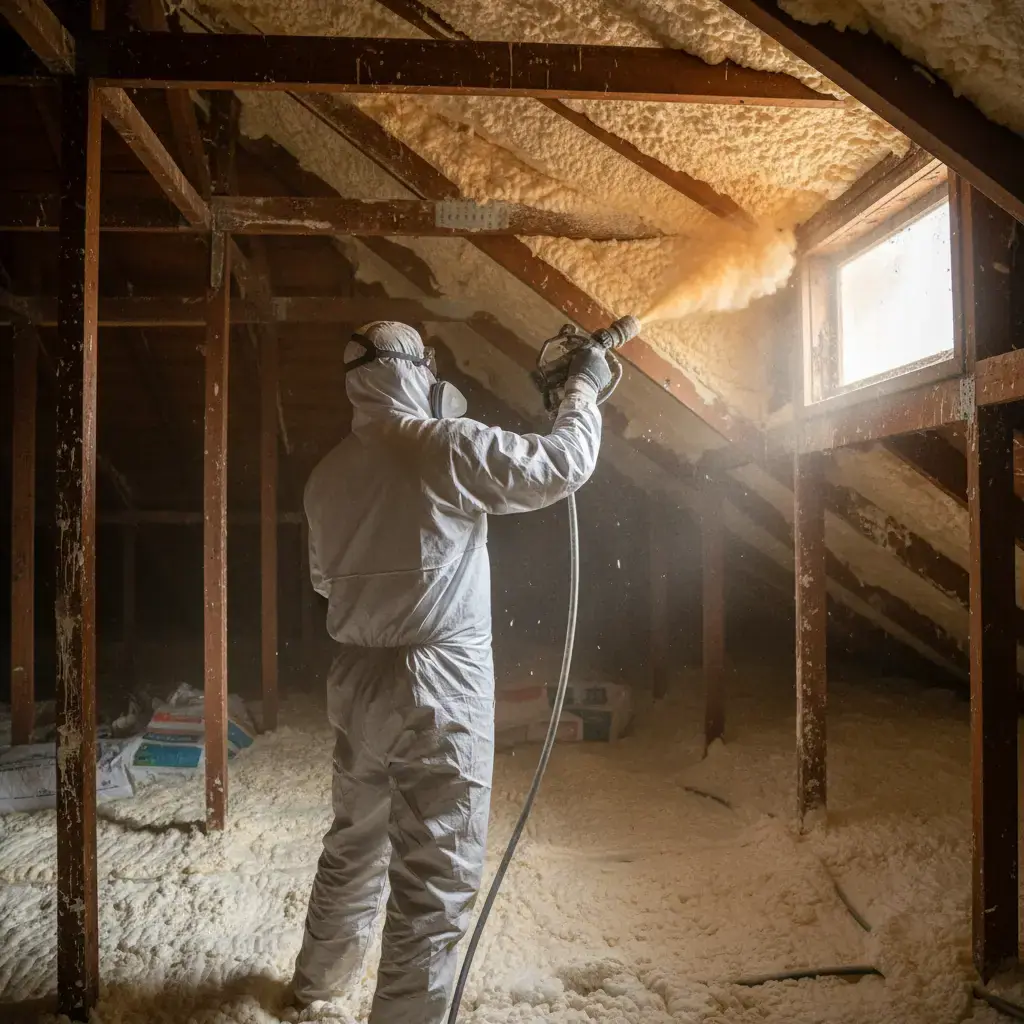
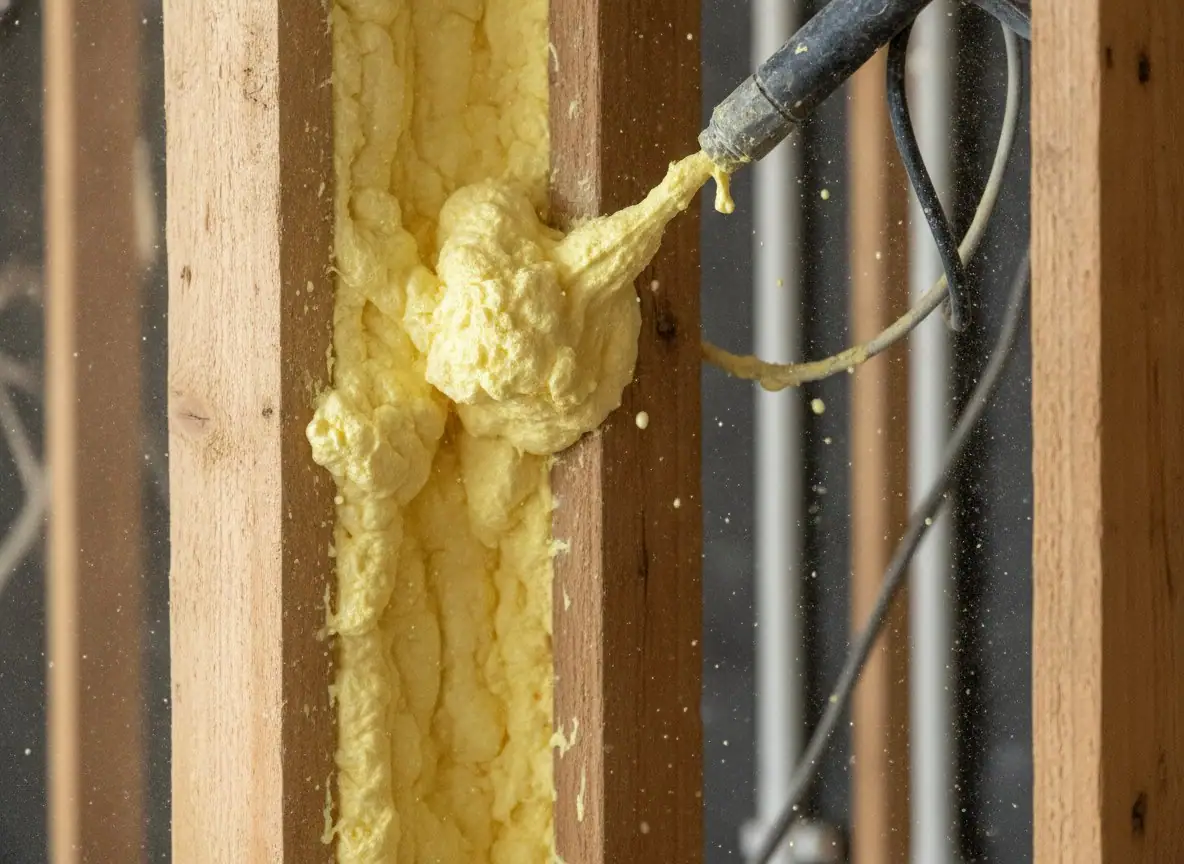
Open-cell and closed-cell spray polyurethane foam provide the highest R-value per inch available and simultaneously seal air bypasses as they insulate. We recommend closed-cell spray foam for homes in Rolling Hills Estates with known moisture infiltration issues near eaves or for unvented attic assemblies where the insulation is applied directly to the underside of the roof deck. This approach converts the attic into a conditioned space, which is especially beneficial when HVAC equipment or ducts run through the attic. Explore our spray foam insulation options
Fiberglass Batt Insulation
Unfaced and kraft-faced fiberglass batts remain appropriate for specific applications in Rolling Hills Estates — particularly for insulating the sloped knee walls in older homes with partial-story attic sections and for new construction framing bays where precise fit can be achieved. Batts are not recommended as a top-up material over existing insulation. View our fiberglass insulation services
Attic Insulation Cost in Rolling Hills Estates, CA
Understanding the cost of attic insulation helps Rolling Hills Estates homeowners budget accurately and evaluate proposals from contractors. Pricing varies based on attic square footage, existing conditions, insulation type, and whether insulation removal is required before installation.
Typical Price Ranges
- Blown-in fiberglass top-up (no removal): $1.50 to $2.50 per square foot, or approximately $2,250 to $3,750 for a 1,500 sq ft attic
- Blown-in cellulose top-up (no removal): $1.25 to $2.25 per square foot, or approximately $1,875 to $3,375 for a 1,500 sq ft attic
- Full removal and replacement (blown-in fiberglass): $3.00 to $5.00 per square foot, or approximately $4,500 to $7,500 for a 1,500 sq ft attic
- Spray foam (closed-cell, applied to roof deck): $5.00 to $8.00 per square foot, or approximately $7,500 to $12,000 for a 1,500 sq ft attic
- Air sealing only: $500 to $1,500 depending on number and type of bypasses
Read moreShow less
Rolling Hills Estates Pricing Factors
Homes in Rolling Hills Estates tend toward higher project costs compared to regional averages for several reasons. The larger-than-average attic footprints of ranch-style homes common throughout the city, the frequent need for contaminated insulation removal due to rodent activity near open space areas, and the access challenges posed by low-pitched rooflines all add to project complexity. Attic access hatches in some older homes in the city require enlargement before commercial blowing equipment hoses can be properly routed.
Available Rebates
Southern California Edison offers rebates of up to $0.10 per square foot for qualifying blown-in insulation installations in existing homes meeting minimum R-value thresholds. The Federal Residential Clean Energy Credit (25C) provides a tax credit of up to $1,200 for qualifying insulation improvements. We provide documentation to support all rebate and tax credit applications.
Call 310-496-8515 for a detailed written estimate specific to your Rolling Hills Estates home.
Rolling Hills Estates Neighborhoods We Serve
Highridge Estates and the Highridge Road Corridor
Homes along and near Highridge Road represent some of the highest-elevation residential properties in Rolling Hills Estates, with many parcels above 1,000 feet. These homes, predominantly built in the 1960s and 1970s on generous lots, feature expansive ranch-style rooflines with large uninsulated attic footprints. The elevated position increases wind exposure during Santa Ana events and amplifies radiant heat gain during summer afternoons. Attic insulation upgrades in this area consistently deliver among the highest energy savings in the city.
Palos Verdes Drive North Corridor
Properties along Palos Verdes Drive North and its adjacent residential streets include a mix of original 1950s ranch homes and later infill construction from the 1980s and 1990s. The older homes in this corridor frequently have original fiberglass batt insulation that has not been touched since construction. Proximity to open equestrian trail easements makes rodent intrusion and attic contamination a recurring issue in this area.
Chandler Ranch Road Area
The Chandler Ranch Road neighborhood borders significant open space and horse trail corridors, placing homes here at elevated risk for roof rat and wildlife intrusion into attic spaces. We frequently perform combined insulation removal, rodent proofing, and attic cleaning services for homeowners in this section of the city. Learn about our rodent proofing services View our attic cleaning services
Williamsburg Lane and Rolling Hills Road Neighborhoods
Mid-century homes in the Williamsburg Lane and Rolling Hills Road areas represent classic Rolling Hills Estates residential architecture — low-pitched gable roofs, attached garages, and broad ceiling planes that create large, accessible attic spaces. These homes respond particularly well to blown-in insulation upgrades due to the open, unobstructed attic layouts common to the era’s construction.
Attic Insulation Maintenance Tips for Rolling Hills Estates Homeowners
- Inspect attic insulation depth annually in September, before the onset of Santa Ana wind season. Use a ruler or depth probe to confirm insulation has not been disturbed or compressed below 10 inches of blown-in material.
- Check soffit vents each spring for blockage from settled insulation or debris. Restricted ventilation allows moisture to accumulate, which degrades insulation performance in the marine-layer environment of the Palos Verdes Peninsula.
- Inspect for roof rat entry points along eaves, ridge vents, and gable screens each October before cooler temperatures drive rodent activity indoors. Screen or seal any gaps larger than one-quarter inch.
- After any HVAC service call, confirm that technicians have not displaced blown-in insulation from attic floor areas while accessing equipment or ductwork.
- Keep the attic hatch cover in place and confirm its insulated cover is intact. A missing or uninsulated attic hatch is the equivalent of leaving a window open in the ceiling of your home year-round.
- Following any significant marine layer rain event, particularly during La Niña years when Palos Verdes Peninsula rainfall can exceed 18 inches seasonally, inspect the attic for signs of roof leak damage or moisture staining on insulation near eaves.
- Review utility bills each January as a benchmark. A year-over-year increase in heating costs without a corresponding change in usage patterns is a reliable indicator of insulation degradation.
Why Choose High Return Insulation in Rolling Hills Estates
High Return Insulation is a professional insulation contractor with direct experience serving homes across Rolling Hills Estates and the wider Palos Verdes Peninsula community. We understand the specific building stock of this city — its mid-century ranch homes, its exposure to coastal marine layer moisture cycles, its rodent pressures from bordering open space, and the elevated attic temperatures generated by the combination of hilltop sun exposure and concrete tile roofing common throughout the neighborhood.
We do not subcontract our crews. Every installation is performed by our own trained technicians who follow the same process and quality standards on every project. We provide written documentation of R-values achieved, before-and-after photography, and records suitable for utility rebate applications and real estate disclosure.
Read moreShow less
Our proposals are detailed and transparent — no hidden fees for disposal, equipment, or air sealing that are revealed only after work begins. We provide free attic assessments with no pressure, and we are happy to help Rolling Hills Estates homeowners understand their options before committing to any scope of work. Learn about our insulation removal services Explore crawl space insulation options
FAQ
Frequently Asked Questions — Attic Insulation in Rolling Hills Estates, CA
How much does attic insulation cost in Rolling Hills Estates?
Most attic insulation projects in Rolling Hills Estates range from $1,875 to $7,500 depending on attic square footage, the need for insulation removal, and the type of insulation selected. Homes with contaminated insulation requiring full removal before reinstallation will fall toward the higher end of this range. Spray foam applications for unvented attic assemblies are priced separately, typically $7,500 to $12,000 for a standard attic. We provide free written estimates for every project.
How long does attic insulation installation take in Rolling Hills Estates?
A standard blown-in insulation top-up for a Rolling Hills Estates ranch-style home with an attic of 1,500 to 2,000 square feet takes four to six hours on a single day. Projects requiring full insulation removal first typically require two days. Spray foam roof-deck applications may require two to three days depending on attic complexity and cure time requirements.
What R-value do I need for my attic in Rolling Hills Estates?
The U.S. Department of Energy recommends R-38 to R-60 for attics in Climate Zone 3, which covers Rolling Hills Estates. We target R-49 as the standard for most homes in the city, which typically requires approximately 16 to 18 inches of blown-in fiberglass or approximately 13 to 15 inches of blown-in cellulose installed over the attic floor. California’s Title 24 energy code may impose different requirements for specific renovation projects.
Does the marine layer near Palos Verdes affect my attic insulation?
Yes. The persistent marine layer that blankets the Palos Verdes Peninsula from late May through September introduces moisture that can degrade fiberglass batt insulation over time, particularly near soffit vent areas. Blown-in fiberglass and properly installed cellulose insulation are more resistant to this moisture exposure than aged batt products. Maintaining clear attic ventilation is important in managing this condition.
Do I need to remove old insulation before adding new insulation?
Not always. If existing insulation is clean, dry, and free of rodent contamination, it is generally appropriate and cost-effective to install new blown-in insulation on top of the old material. However, Rolling Hills Estates homes adjacent to open space corridors and equestrian trails frequently have rodent-contaminated insulation that must be removed before new insulation is installed, both for air quality and to eliminate nesting material that attracts future intrusions.
Can you handle rodent proofing and attic cleaning in addition to insulation?
Yes. High Return Insulation provides insulation removal, attic cleaning, and rodent proofing services as an integrated package. For many Rolling Hills Estates homeowners near open space areas, the most effective long-term solution is a complete attic remediation — removing contaminated material, sanitizing the attic space, sealing all rodent entry points along the roofline and eaves, and then installing fresh insulation. Learn more about our rodent proofing services
Are there rebates available for attic insulation in Rolling Hills Estates?
Yes. Southern California Edison offers insulation rebates for qualifying homes, and the Federal 25C Residential Energy Efficiency Tax Credit provides up to $1,200 for qualifying insulation improvements installed through December 31, 2032. We provide all documentation required to claim these incentives as part of our standard project completion package.
Is attic insulation a good investment for homes in Rolling Hills Estates?
Rolling Hills Estates homes with large ranch-style attic footprints and original 1960s insulation consistently demonstrate payback periods of five to eight years based on energy savings alone, with many homeowners reporting 20 to 30 percent reductions in annual heating and cooling costs. Given the city’s elevated electricity rates through Southern California Edison and the premium placed on energy-efficient homes in the Palos Verdes Peninsula real estate market, attic insulation upgrades typically deliver strong returns both in direct savings and in home value.
Schedule Your Free Attic Insulation Assessment in Rolling Hills Estates Today
If your Rolling Hills Estates home was built before 1980, your attic insulation is almost certainly underperforming. High energy bills, inconsistent room temperatures, and the visible signs of compressed or contaminated insulation are all problems we can solve — quickly, cleanly, and with transparent pricing.
High Return Insulation serves homeowners throughout Rolling Hills Estates and the Palos Verdes Peninsula with professional attic insulation services including blown-in fiberglass, blown-in cellulose, spray foam, insulation removal, attic cleaning, and rodent proofing. We offer free, no-obligation attic assessments with written estimates provided on the same visit.
Call us today at 310-496-8515 to book your free attic assessment. Our team is ready to help you stop losing energy through your roof and start saving money every month.
Get in touch
Find insulation help near you
Request a free estimate online or give us a call — our team will follow up quickly.
- Call us(310) 496-8515
- Visit28441 Highridge Rd, Rolling Hills Estates, CA 90274
- HoursMon-Sun 07:00-19:00